Author Archives: jenny

Who Do You Think You Are? Story

Family history has been one of my hobbies since I was at school and it’s grown substantially over the years, so much so that I started this family history blog as a place to record my research alongside my family history database.

I love how much easier it has become to research your family history. I used to spend my lunch hours at the old Family Records Centre or my weekends at the National Archives in Richmond. With large-scale digitisation projects you can now research from the comfort of your own home and I’ve been enjoying using lots of new record sets, websites and ways of sharing and exploring my own family history.

In celebration of the 10th birthday of celebrity genealogy series Who Do You Think You Are?, Findmypast and Wall to Wall have recently launched Who Do You Think You Are? Story, a website that allows fans of the show to create a personalised, visual journey through their family history. The site is still in its beta phase, so extra historical facts and context will be added over the next week or so, but there’s already loads of interesting historical detail to colour in your history.

Oop over to whodoyouthinkyouarestory.com to get started. It’s simple to sign up and completely free. You can check out Matthew Pinsent and Larry Lamb if you want to see how the site works, or just get started by adding your own details.

There are 3 stages to the site:

Step 1 – Tell us about your relatives

Enter key information and upload family photos. You don’t need every detail, but each fact makes the story richer.

Step 2 – We’ll add in events that affected their lives

For example, we’ll show you what was happening in society at the time your grandfather was born.

Step 3 – Expand your story

Add in your own events such as marriages, memories or even scandals. You can keep your story hidden or share it with family and friends.

A couple of things that are good about the site:

you only need to add a minimum amount of data – full name, birth date and birth location

but you can upload an image and add more facts if you want

the animated retelling of the family story is great and I love the way it’s interspersed with significant contemporary issues

there’s a timeline at the bottom of the page which includes the key historical events, so it’s really easy to see your story unfold

I like the form you can use to email a relative if you are missing a piece of information

Room for improvement:

The only thing I would like to see improved is being able to upload your data from a GEDCOM file. I’ve worked hard on my family tree, it contains nearly 700 people, and have stored the information in this format for years. Other family tree websites use it and I find it a really useful way of sharing my information with other people.

As WDYTYA has been around for 10 years it must be watched by both existing and new family historians. I’m hoping this feature might be added as in this electronic age I think it makes sense to make it easy for people to upload their information.

Don’t forget you can take a look at the Who Do You Think You Are? Story and start your own tree for free.

Thomas Hacker

I found an intriguing photograph of Thomas Hacker and description on Flickr from Swindon Local Studies Library.
c1900: Thomas Hacker, 10 Merton Street, Swindon (1835-1904)

According to the description:
Thomas Hacker was born 1835 at Broad Hinton. He was one of nine children of Benjamin & Elizabeth Hacker. The 1881 census records him as being a Master Bread Maker living at 10 Merton Street. Thomas was one of the early christians of the Assembly group at King Street Hall, Swindon who faced oppostion. He considered it an honour to be persecuted for his witness for the Lord. He framed his police court summons and it was an exhibit in his home to the end of his days. In 1889, as one of the twelve brethren with their families they began meeting together at Merton Hall, Merton Street. At some point in the 1890’s Thomas greived by unhappy past events decided to leave Swindon. He sold his business as baker and corn-merchant, also his business premises including the Hall where the believers met, and took up farming. After a period of time he returned to Swindon much broken in health. He had a marvellous escape from death when a horse he was driving in a trap, bolted. He lost grip of the reins, and in trying to recover these, he overbalanced and fell at the horse’s heels; the wheels of the trap passed over his head and scalped him.. Through the Lord’s mercy, he made good recovery, althought not regaining robust health. He was able to see the moving of the group from Merton Street Hall to Regent Hall in 1899 take place as result of increasing numbers in the Fellowship. He died on 30th October 1904 and was buried in Radnor Street Cemetery. A scroll covering a lowly cairn of stones read: “Thomas Hacker, Born 1834, Born again 1854, Fell Asleep 1904. Waiting ‘Till he come’.”

His name and connection to Broad Hinton mean he must be part of our family tree but I can’t quite find where he belongs at the moment.

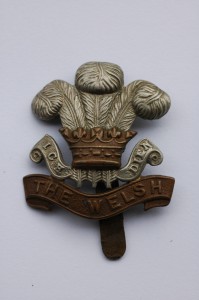
The Welsh cap badge

This Welsh cap badge was amongst my paternal Grandmothers possessions and given to me when she died.

The Welsh.JPG

It must have belonged to Alfred Mansel Young, her brother-in-law, as the name YOUNG has been scratched on the reverse.

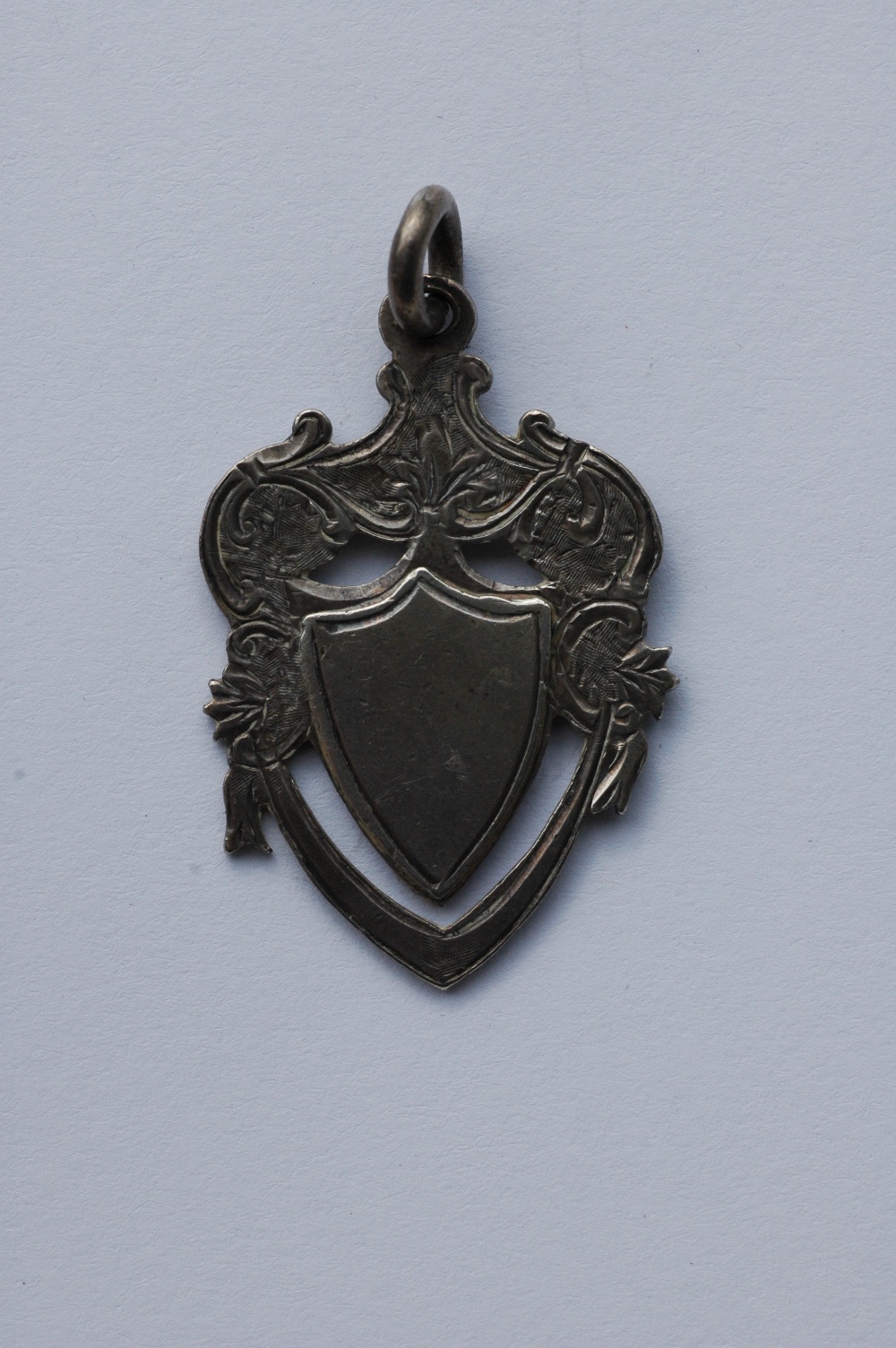
Silver watch fob

I found this silver watch fob in my paternal grandmother’s button tin alongside random keys, army buttons and normal buttons.

silver watch fob.JPG

I think the design is fairly standard.

SILVER WATCH FOB.JPG

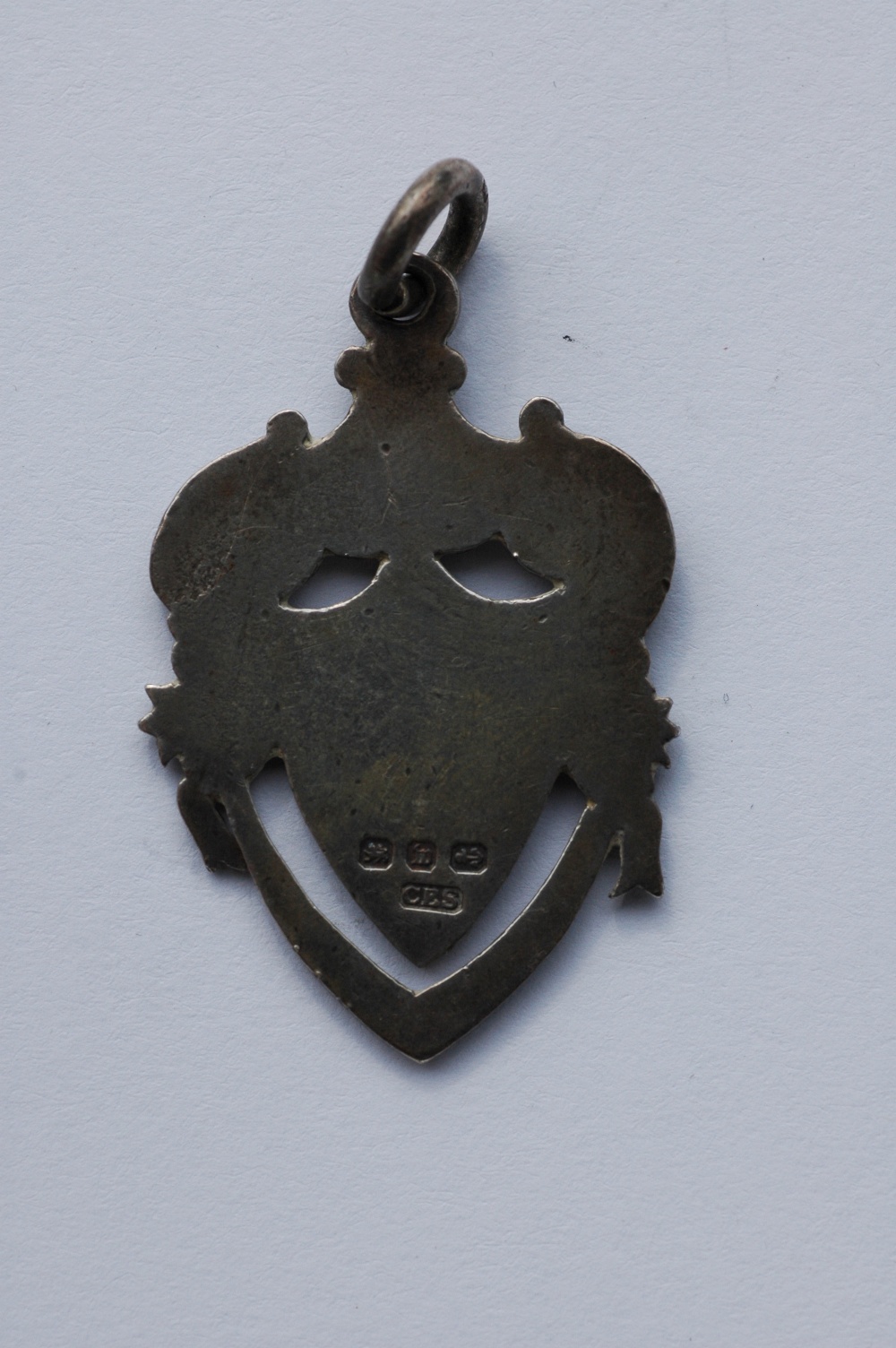
The reverse bears the following stamps:

lion passant guardan = certifying the silver

letter m = 1867

anchor – Birmingam

Makers mark = CES (possibly Charles Edward Soloman, Vyse Street, Birmingham)

I thought I had a photograph which possibly featured this watch fob but I can’t find it at the moment. The chain and watch it was attached to are unfortunately missing.

The Admiralty Badge

I love this little buttonhole brass badge, found amongst the buttons in my grandmother’s button tin. I have no idea who it belonged to.

On War Service 1914

On War Service badge.JPG

The Admiralty Badge was issued to war workers in shipyards during 1914. In 1916 Admiralty badges were numbered to control their issue amongst the numerous shipyard and related employers.

The 1914 On War Service badge was the first official badge issued during the First World War to identify non-combatant persons whose services were deemed necessary for war work. The badge was issued late 1914 to “workmen whose services are indispensable for the rapid completion of HM Ships and Armaments”.

The issue of this badge to individuals considered essential for war work was left to the shipyards and related employers and if the employee were to cease that employment, the badge had to be handed back.

I think the badge may have belonged to one of my paternal great grandfathers, either George James Benger, who worked in Naval Ordnance in Portsmouth, or Mansel Young who worked as a Dockyard Labourer also in Portsmouth, during the First World War.

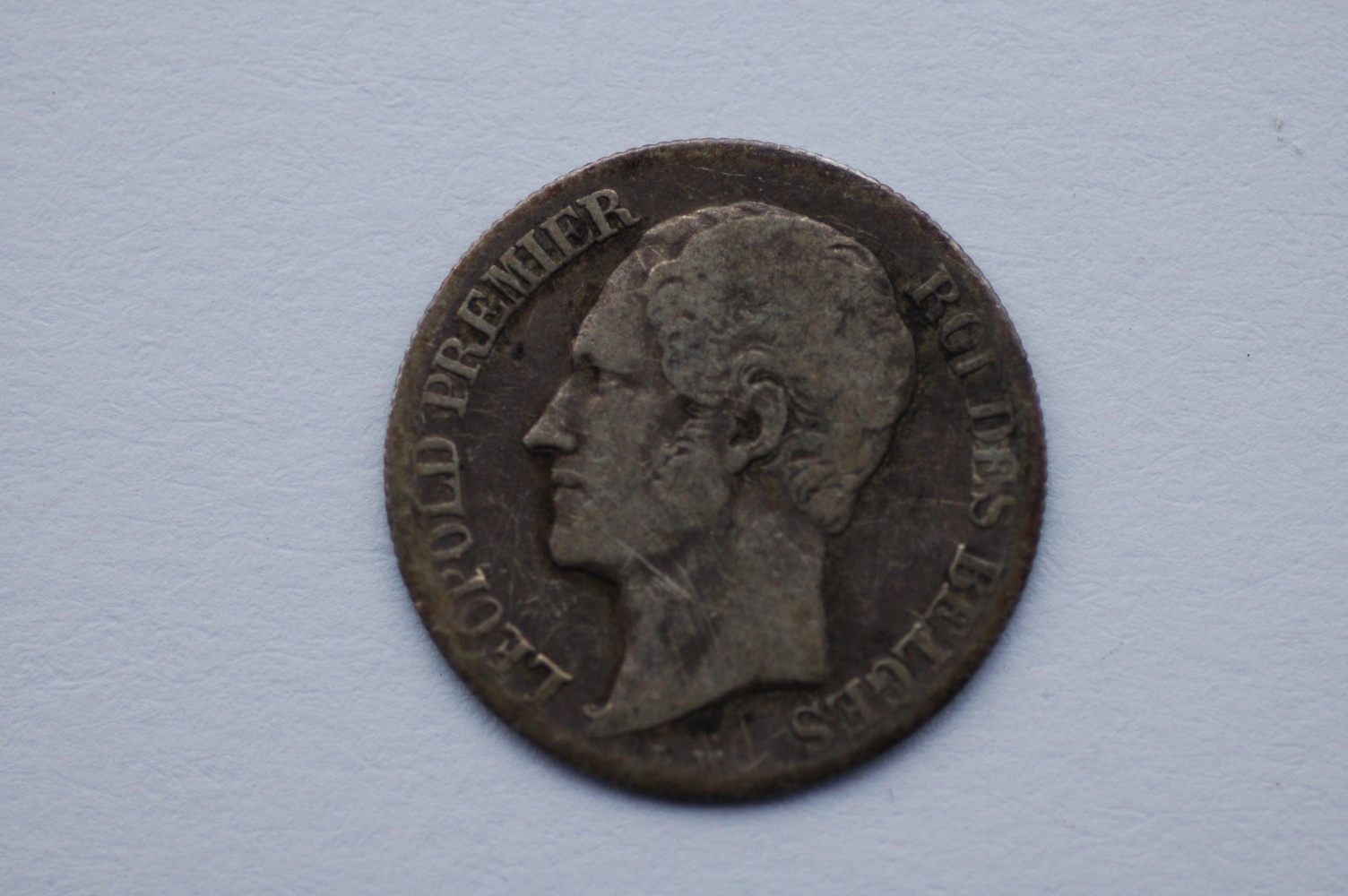
Belgium 20 centimes coin

I have a very poor example of a Belgium 20 centimes coin, dated 1853.

DSC_2464.JPG

The description reads: L’UNION FAIT LA FORCE with a crowned arms within a wreath.

DSC_2466.JPG

LEOPOLD PREMIER ROI DES BELGES