Tag Archives: First World War

Soldiers’ Effects Records now online

Earlier today I received an email from lost cousins about First World War Soldiers’ Effects records now online. Years ago I contacted the National Army Museum about thee records  as I wanted to see if they had any record of my great uncle Alfred Mansel Young. They did, but I subsequently lost the information.

Anyway, last night I searched on Ancestry which is where the records are now available and was able to re-discover the record.
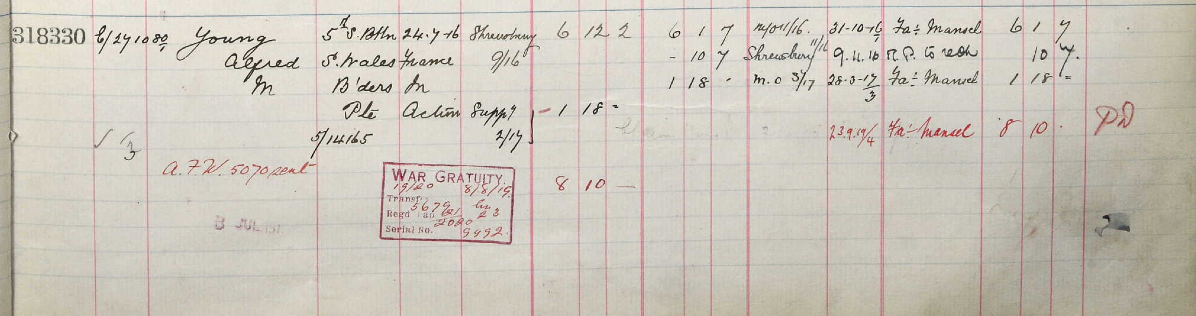
Soldiers' Effects Records

I am so happy to have a copy of this record. I don’t understand much of it but it does show that the money was paid to his father Mansel Young. I find this interesting as at the time of his enlistment he was living in South Wales and I’m not sure why.

The Soldiers’ Effects Records, 1901-60, relating to monies owed to soldiers who were killed in action are held by the National Army Museum (NAM Accession Number: 1991-02-333; Record Number Ranges: 317501-319000; Reference: 164). You can access them via Ancestry and search them here.
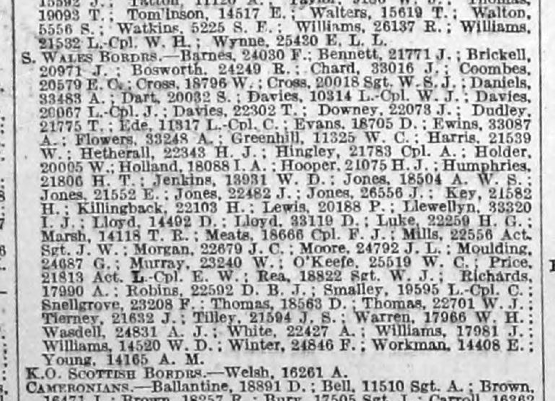
The Times Daily Casualty List

As I mentioned the other day I signed up for a free trial with The Genealogist and already I have found a new record! My great uncle is mentioned in the Daily Casualty List published in The Times, 4th September 1916.

Daily Casualty List

Missing and Killed in Action records go online

I recently read that The Genealogist has released some new records  from the First World War. This new release contains over 800,000 records. Included are 575,000 Killed in Action records, over 226,000 unique Missing-in-Action records and 14,000 Status Updates.

My great-uncle Alfred Mansel Young was killed in action in 1916 so I was interested to see if I could find out any more information about his death.

Unfortunately The Genealogist is a subscription site and although it looks like they might have some interesting records I can’t afford a subscription. However, they offer a 2 week free trial here so it looks like I shall be signing up later tonight to take a closer look!

Let’s #Remember together

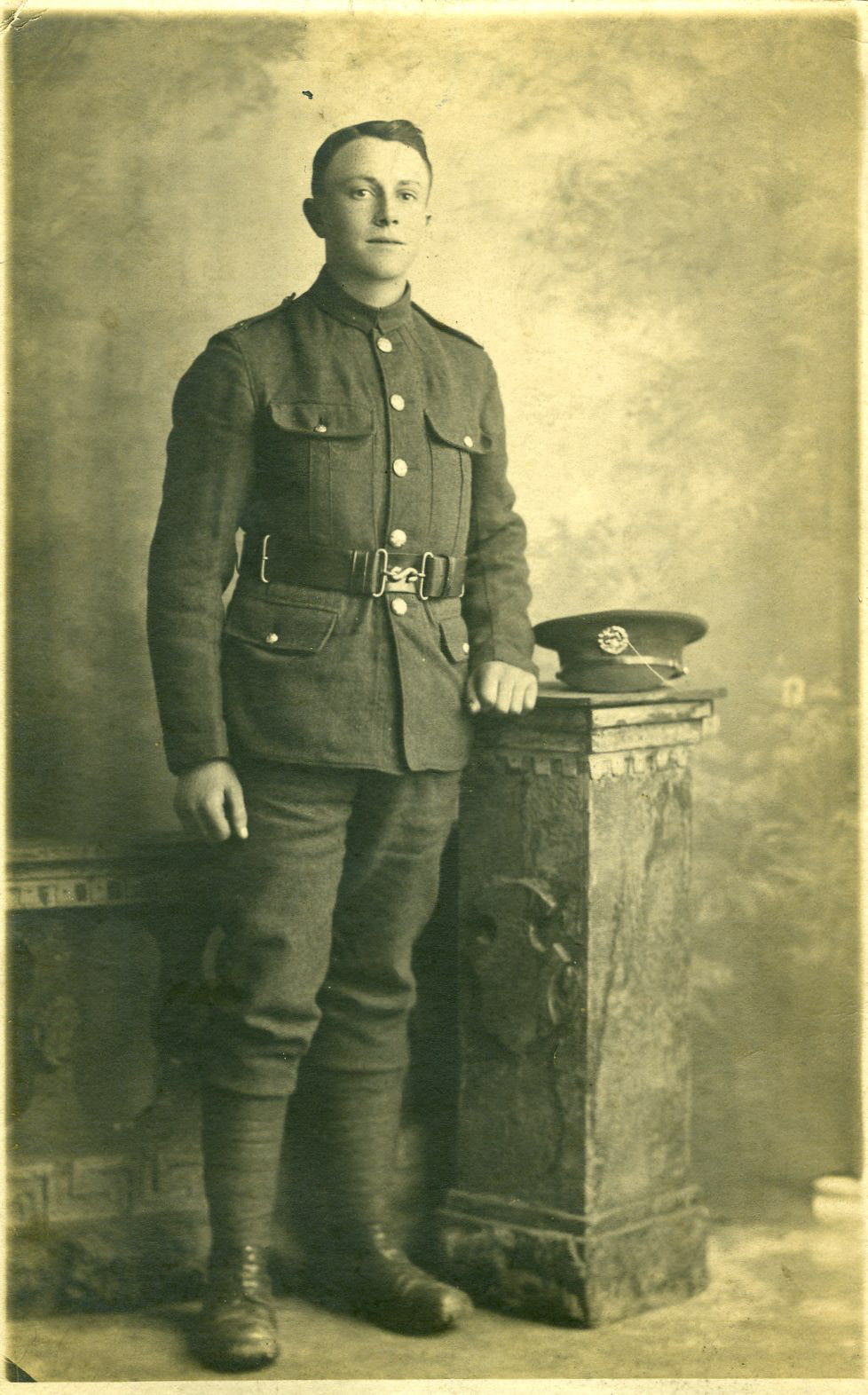
Tonight I spent some time uploading information to the Lives of the First World War site about my great uncle Alfred Mansel Young (you can see his life story page here). As you all know, this weekend is Remembrance Sunday which seemed like the perfect time to encourage you to use the site too.

Alfred Mansel Young

The site is really easy to use:

Go to livesofthefirstworldwar.org

Who will you remember? – type in a surname (and service number, if known)

Find your connection in millions of Life Stories already started by IWM

Create a free account and press the ‘Remember’ button on the Life Story page – so everyone can see who you are Remembering

Use email, Facebook and Twitter to Share the link to the Life Story page with your family and friends.

Use #remember and #LivesOfWW1 to join the community remembering together on Twitter.

Who will you remember? Your First World War connection could be a relative who served, someone who shares your surname or a person listed on your local war memorial.

Upload your story to ensure that these Life Stories are remembered now and saved for future generations on Lives of the First World War.


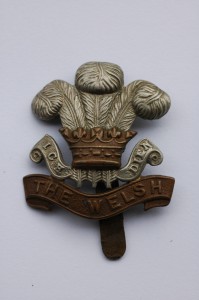
The Welsh cap badge

This Welsh cap badge was amongst my paternal Grandmothers possessions and given to me when she died.

The Welsh.JPG

It must have belonged to Alfred Mansel Young, her brother-in-law, as the name YOUNG has been scratched on the reverse.

The Admiralty Badge

I love this little buttonhole brass badge, found amongst the buttons in my grandmother’s button tin. I have no idea who it belonged to.

On War Service 1914

On War Service badge.JPG

The Admiralty Badge was issued to war workers in shipyards during 1914. In 1916 Admiralty badges were numbered to control their issue amongst the numerous shipyard and related employers.

The 1914 On War Service badge was the first official badge issued during the First World War to identify non-combatant persons whose services were deemed necessary for war work. The badge was issued late 1914 to “workmen whose services are indispensable for the rapid completion of HM Ships and Armaments”.

The issue of this badge to individuals considered essential for war work was left to the shipyards and related employers and if the employee were to cease that employment, the badge had to be handed back.

I think the badge may have belonged to one of my paternal great grandfathers, either George James Benger, who worked in Naval Ordnance in Portsmouth, or Mansel Young who worked as a Dockyard Labourer also in Portsmouth, during the First World War.