St Ishmael Church, St Ishmaels, Ferryside

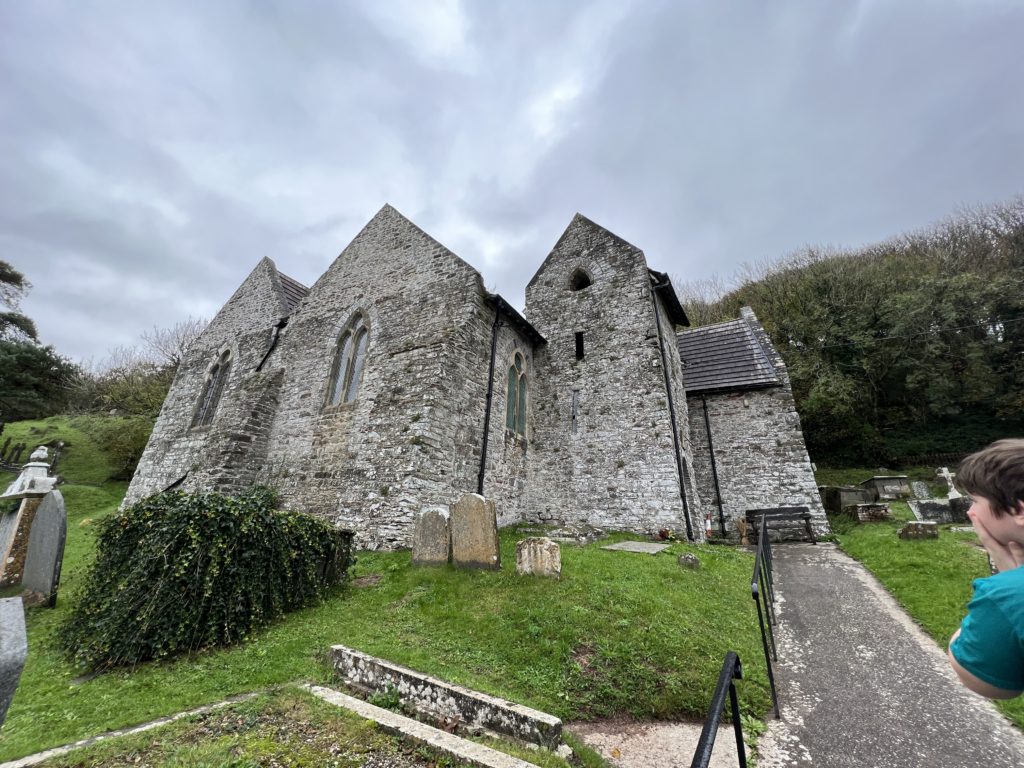
St Ishmael Church is the most amazing church on the side of a hill overlooking the River Towy estuary and Carmarthen Bay. It is reached along a narrow road with a single parking spot across from the church.

St Ishmael Church, St Ishmaels, Ferryside

Unfortunately the church is only open at weekends so we were unable to visit inside. The church includes a 13th century nave and chancel, 14th century transcept and 15th century north aisle. It is a lovely building with an unusual tower.

St Ishmael Church, St Ishmaels, Ferryside

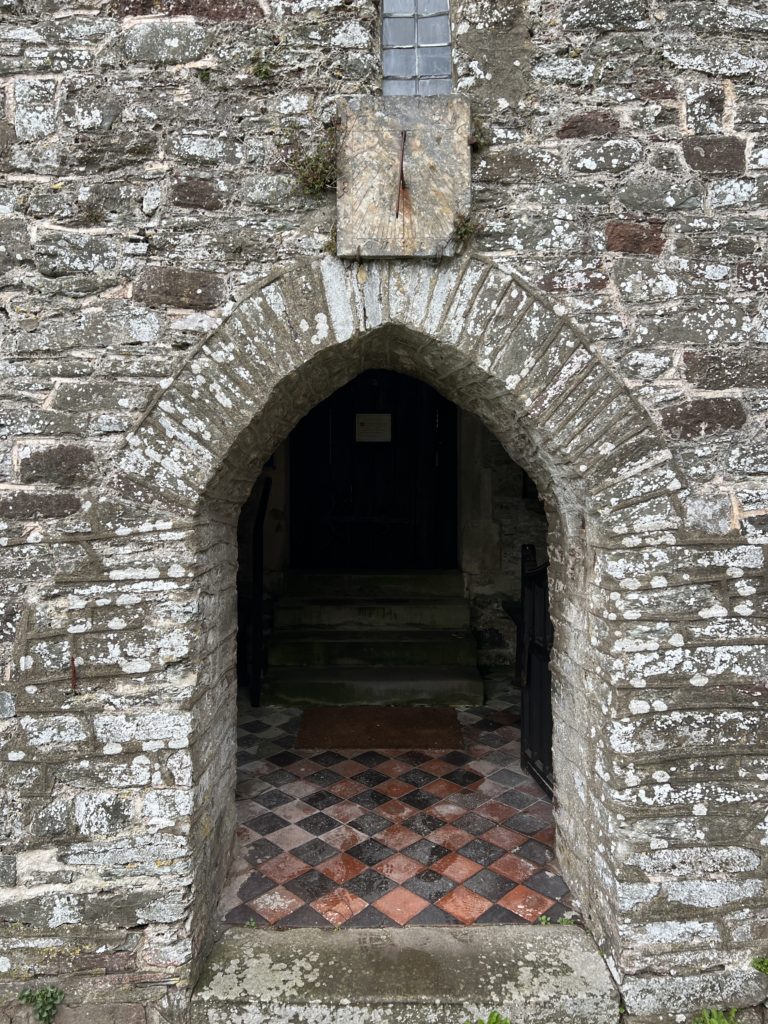
The sundial over the entrance is dated to 1725.

St Ishmael Church, St Ishmaels, Ferryside

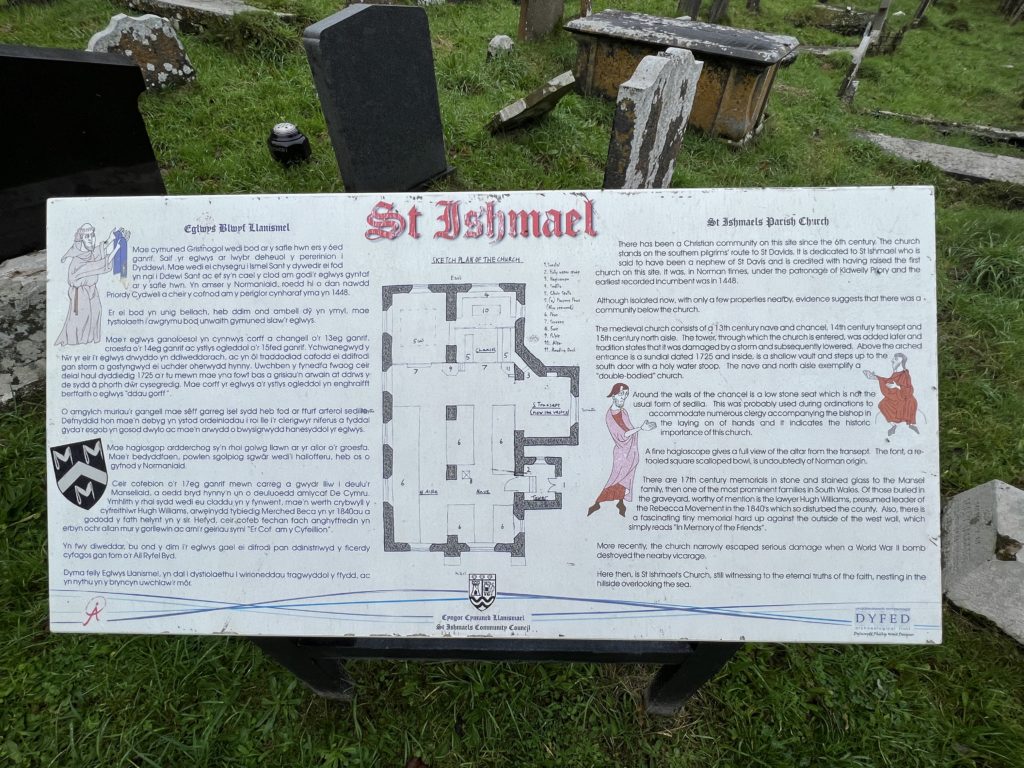
There is a handy information board in the churchyard which tells you more about the church and its connection to the Rebecca Riots.

St Ishmael Church, St Ishmaels, Ferryside

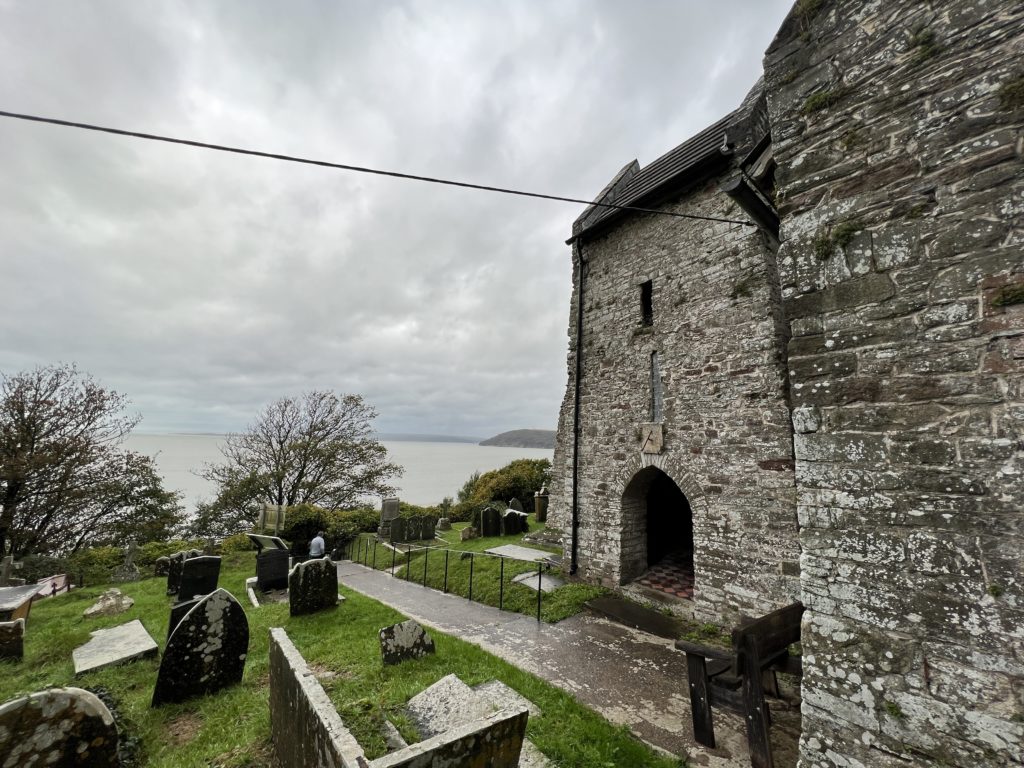
There are amazing view over Carmarthen Bay but the church feels isolated because much of the village was washed away.

St Ishmael Church, St Ishmaels, Ferryside

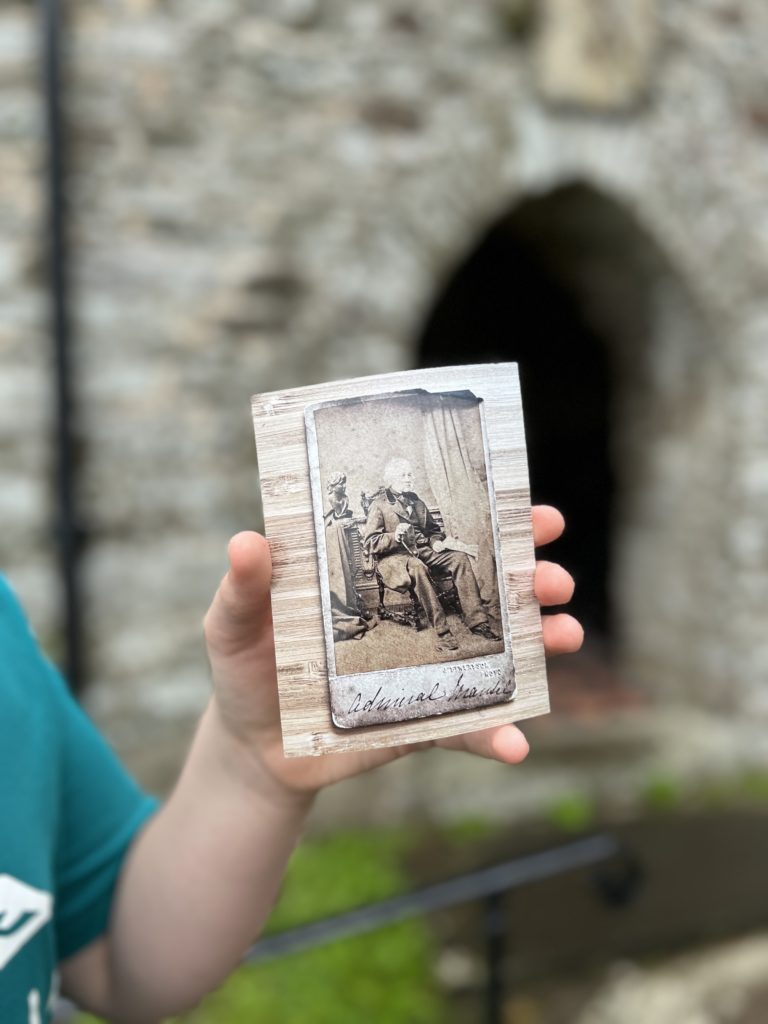
I couldn’t resist bringing a portrait of my ancestor who was baptised here back on 14th October 1783.

St Ishmael Church, St Ishmaels, Ferryside

We have a few family connections to the church:

William Mansel married Mary Phillips on 26th August 1765

[Rebecca Elisabeth baptised 9th August 1769 at St Peter’s, Carmarthen

Richard Mansel baptised November 10th 1770, at St Peter’s, Carmarthen

William Mansel baptised April 4th 1776, at St Peter’s, Carmarthen]

Rebekah Elisa Mansel buried 20th February 1772

Francis Mansel baptised 20th October 1772

Mary Mansel baptised 5th December 1774

John Mansel baptised 16th August 1776

Rebekah Eliza Mansel baptised 17th April 1778, buried 12th October 1797  – The entry for burial does not say daughter of Sir William Mansel like the other entries, so perhaps the name was similar but not the same family?

George Mansel baptised 3rd September 1779, buried 20th July 1797

Harriot Mansel baptised 18th July 1781

Thomas Mansel baptised 14th October 1783

Robert Charles Mansel baptised 12th Feb 1789

Sir William Mansel of Iscoed Baronet, buried 14th January 1804

[Lady Mary Mansel (nee Phillips) died 1811 but could not find in the St Ishmael Parish Register for 1811 a she was buried at St Peter’s Carmarthen in the family vault on the 3rd January 1813.]


There is an unusual stained glass window with Welsh and English inscription: Lt. General Robert Christopher Mansel, Knight of Hannover, Colonel of the 68th Lt. Infantry who died April the 8th 1864 aged 75 and was buried near the camp at Shorncliffe where he so ably commanded for several years”. He was the brother of my 3xgreat-grandfather, Thomas Mansel.

St Ishmaels is well worth a visit and can be found:
St Ishmaels
Ferryside
Carmarthenshire
SA17 5UL

Other places to explore relating to the Mansel family:

Penrice Castle Estate

Oxwich Castle

Oxwich Castle

Oxwich Castle is another building related to the Mansel family. Oxwich Castle is a Grade I listed castle which overlooks Oxwich Bay on the Gower Peninsula. It is a grand Tudor fortified manor house built in courtyard style, rather than a proper castle.

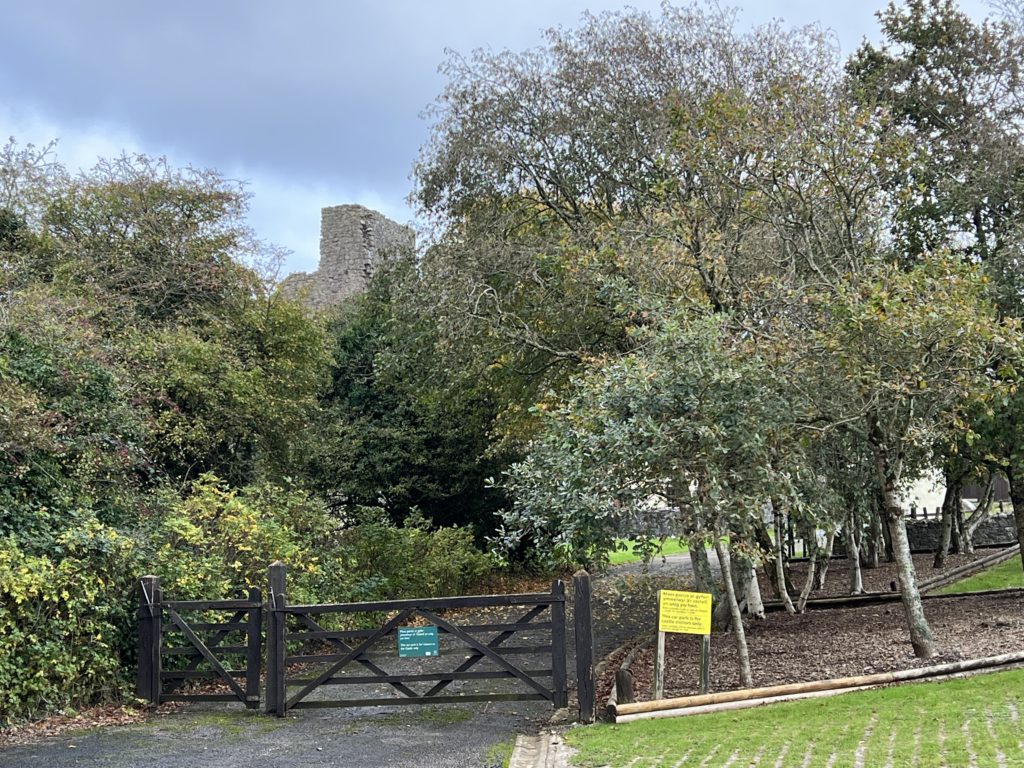
Today it is managed by CADW and has limited opening hours. Unfortunately it was closed when we visited and we weren’t really able to see anything from the car park, just the top of a tall tower.

Oxwich Castle

Oxwich was originally built by Sir Rice Mansel who also owned land at Penrice and Margam Abbey.

Hopefully we will be able to go back another day.

Other places to explore relating to the Mansel family:

Penrice Castle Estate

Penrice Castle Estate

Last Autumn we were lucky to spend a week exploring the Gower and Carmarthen in Wales. This area was the home of a few branched of the Mansel family so we spent some happy hours exploring the area and buildings of interest.

Penrice Castle Estate

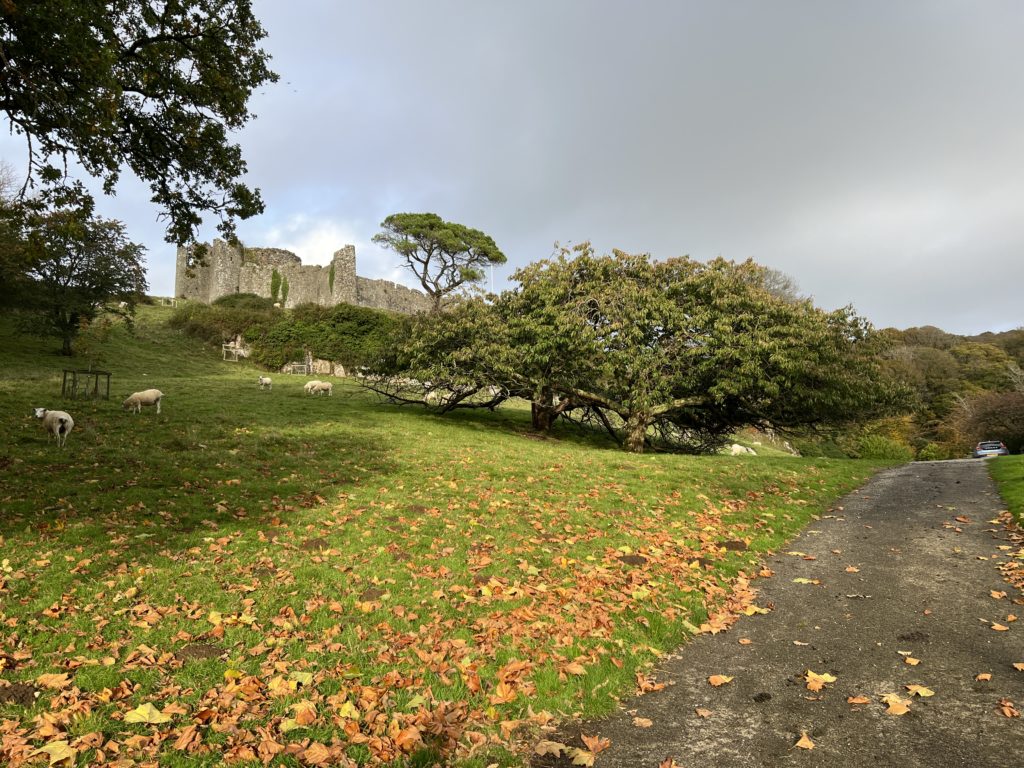
The Gower peninsula is very beautiful and we were able to walk through the grounds of the Penrice Castle Estate.

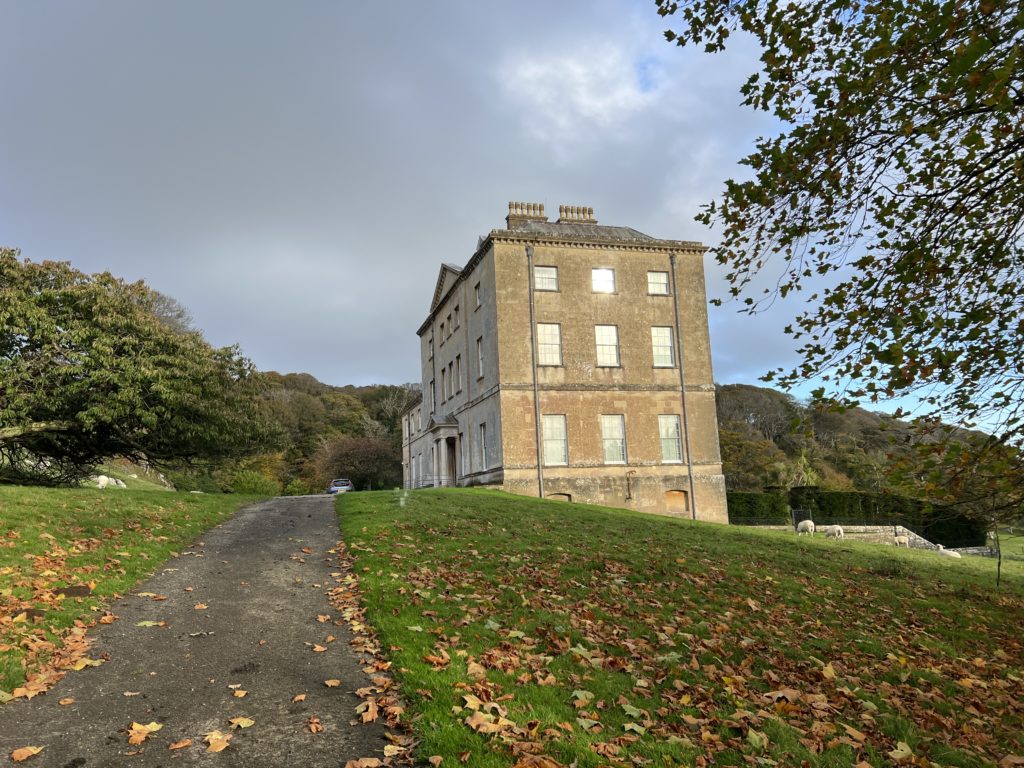
The Penrice Castle Estate is on an amazing site and consists of a ruined castle and later Georgian house along with a Home Farm and lots of land. Originally owned by the de Penrice family, the last de Penrice married a Mansel in 1410 and the castle and its lands passed to the Mansel family. The Mansels later moved to Margam Abbey, which we were also able to visit.

Penrice Castle Estate

The mansion built in the 1770s by the neo-classical architect Anthony Keck for Thomas Mansel Talbot (1747–1813) of Margam and Penrice, was built to house the collection of antiquities and works of art he had collected on his Grand Tour. Interestingly, Keck also designed Iscoed House for William Mansel and built in 1772, as well as the Orangery at Margam Park which was completed in 1793.

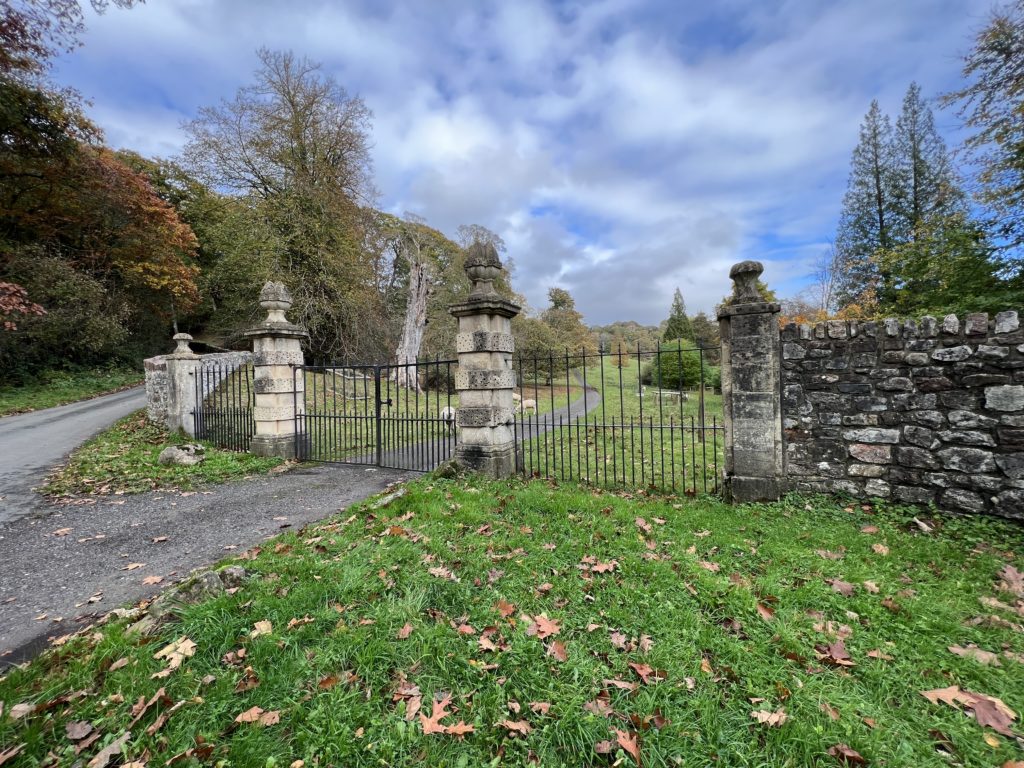
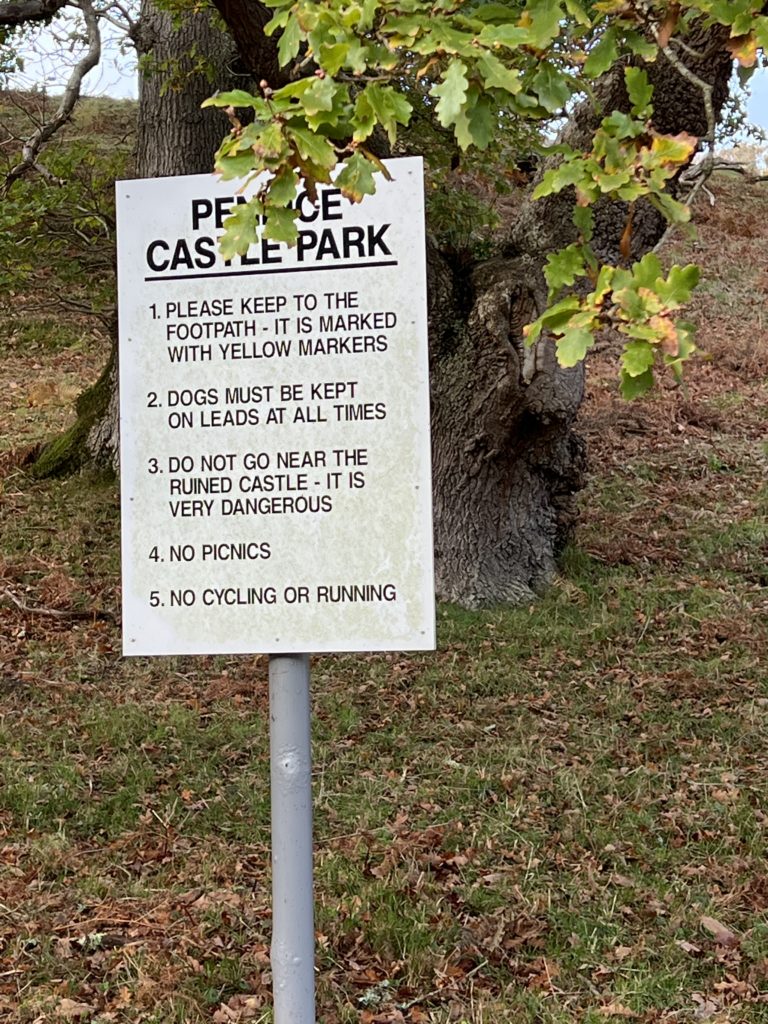
The house is privately owned but a public footpath runs through the estate grounds. This meant we were able to walk past the ruined castle and the Georgian house.

Penrice

The castle was slightly on a hill with the later house built below it. Both had the most amazing views down towards the coast.

Penrice Castle

It was the most amazing experience to walk past a house connected to your ancestors. I’m not sure Thomas Mansel would ever have visited this branch of his family, but who knows?

Penrice Castle Estate

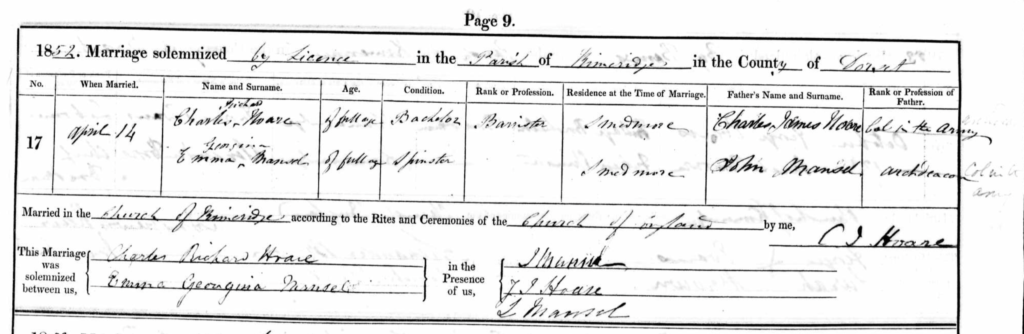
Sloppy marriage certificate

I’ve been enjoying my Ancestry subscription for most of this year and last night noticed a rather sloppy marriage certificate for Emma Georgina Mansel who married Charles Richard Hoare in 1852.

If you look carefully you can see that the person filling out the form omitted the middle names of Emma and Charles. They also got the professions of the fathers the wrong way round, and had to add a note in the margin! What makes this more fun is that this person was the father of the groom, archdeacon C J Hoare.

The marriage took place in the Parish of Kimmeridge and the bride and groom were living at Smedmore at the time of marriage. This house was the home of her father John Mansel, Colonel in the Army.

New Diocese of Dublin records released

Records for the Diocese of Dublin dominate releases the latest press release from findmypast.

Ireland, Diocese of Dublin Marriage Licenses, 1638-1858 

Over 98,000 records have been added to this existing collection, perfect if you have ancestors who may have lived in the Diocese of Dublin. You’ll typically find the date of registration, both spouses’ names, and sometimes occupations and residences.

Ireland, Diocese of Dublin Wills & Grants, 1270-1858 

This existing collection has been bolstered by an additional 34,450 records. These records are from index books that were published in the 1890s, covering wills, grants of probate, or administrations recorded by the Anglican Diocese of Dublin between 1270 and 1858.

Celebrate your Irish heritage this Friday

Family history website, Findmypast, has released thousands of new Irish genealogy records to celebrate St Patrick’s Day. With Findmypast, and their large collection of Irish records, you had a better chance of tracing those often-elusive Irish ancestors.  

Findmypast have added the brand-new collection Ireland, Inland Revenue Wills & Administrations 1828-1879. With transcripts and images, these 261,256 records are a rare survival of priceless information about early Irish wills. The original documents were mostly destroyed in 1922. Typically, you’ll find details such as the name and address of the deceased, the name and address of the executor or administrator, the value of the estate and the date of death.  

 The existing Ireland Calendars of Wills & Administration 1858-1965 collection has been updated with a further 591,011 transcriptions. Though the detail varies from will to will, you’ll normally find the name of the deceased and their death date, the names of any beneficiaries and the county. 

 Other unmissable Irish genealogy records include: 

·         The ffolliott collection (exclusive to Findmypast) 

·         Irish workhouse records 

·         The Irish Quaker collection (exclusive to Findmypast) 

·         Ireland Roman Catholic collection 

·         Irish newspapers 


Plus, Findmypast has several handy guides to kickstart and inspire Irish family history research: 

·         An expert’s guide to researching Irish surnames 

·         Discover the remarkably rich history behind Irish diaspora 

·         Why is Irish genealogy so tricky? 

·         Did your ancestors experience the Great Irish Famine? 

·         Everything you need to know about Irish census records 

·         Were your ancestors caught up in the Irish War of Independence?